Friday, July 20, 2012

Diss Guys Miss Guys, Volume 2

Editor's Note:  "Where's Dwight?" you may be asking. "That guy sucks."  Good question.  We will ritualistically Cleveland steam Dwight Howard, our Miss Guy of the Year, next week.  


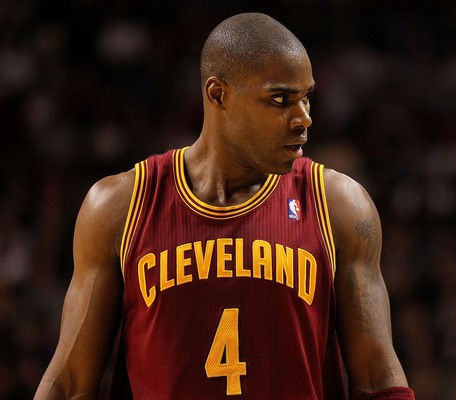
Diss Guy: Antawn Jamison


One of the perverse pleasures of being both a fan of a poorly run team and a liberated fan of various individual players is that I can admire players that I enjoyed on my bad team as they succeed on other teams, and achieve the accolades they never would've approached on the shitty team where their efforts were largely wasted.  One of those players is Antawn Jamison, who spent his first five seasons with my hapless Warriors.  With memories like these, Jamison quickly helped me forget the early blather that he was the short straw in the Vince Carter draft day trade, and became one of my favorite Warriors, and players in general.   Of course we didn't keep him, and that was okay, because he had done his time.  He went on to win the Sixth Man award in Dallas, became a two-type All-Star in Washington, and was acquired as a key stretch forward for a title run in Cleveland.  Of course, none of these things really worked out in the long term, but Jamison stayed classy and professional throughout.  And what's more is the dude can still play.  Last season -- his fourteenth -- Jamison averaged 17 and 6 for a rebuilding Cavs squad.  His quirky-ass post game is still slick, and he just seems like a smart, thoughtful dude.  Hat's off to you, Antawn Jamison, Diss guy.  

But really, did you have sign with...

Miss Guy: Antawn Jamison


Sure, Antawn's a free agent, and has the right to sign wherever he wants.  He entertained offers to be a steady veteran presence on rebuilding clubs like the Warriors or the Bobcats, but listened more closely to overtures from contenders like the Heat, Celtics and Lakers.  In the end, he took far less money to chase a championship in Los Angeles with Steve Nash and, in all likelihood, Dwight Howard.  And even if they don't get Dwight, they've now put together this 1998 Bulls-esque team with an average age well over 30.  Jamison will join some combination of Pau, Bynum or Dwight up front, with Kobe and Nash in the backcourt.  Or, he'll come off the bench and deliver excellent minutes for a team that could use more offense in general.  Again, like all of these weird "retool with experience, not with athleticism" moves that we've been seeing, it's really a good fit.

And yeah.  I understand ring-chasing. But seriously.  The Lakers? 

It amazes me that the most conspiracy-bent fans in the league are Lakers fans, who feel that David Stern is continually out to get them.  Yeah, them, and all seventeen of their championships.  Let's look at the quality players that have worn the purple and gold since 2000 who aren't named Kobe Bryant or Shaquille O'Neal: Karl Malone, Gary Payton, Lamar Odom, Pau Gasol, Steve Nash.  And they had Chris Paul (briefly), and look like they're gonna land Dwight.  And they think Stern's out to get them? 

Again, I understand ring-chasing.  But seriously.  The Lakers?  Bad form.

Wednesday, July 18, 2012

Wild Guesses and Outlandish Speculation: Buyer's Remorse Edition.


You know that robotic grass cutter you got from The Sharper Image catalogue that's sitting in your garage?  Or the toaster from Sky Miles that toasts hot dogs AND buns at the same time?  Well, that grass cutter is your Austin Croshere.  And that toaster?  Yeah, that's your Andris Biedrins.

Everyone buys stupid stuff sometimes. We all make mistakes.  The least we can do, as fans, is to ridicule those who make such dumb decisions.  Because while that grass cutter set you back $175, Andris set you back $66 million.  Maybe you can get him to fire up the mower.

1. What is the worst contract of all-time?  NBA preferred, but any sport will do.


Joe Bernardo: Allan Houston (6 years, $100 million).  Mention the name "Allan Houston" to a die-hard Knicks fan and they'll respond with a long-winded sigh and claim that the Knicks have never been the same since then.  At certain seasons of his career, he made more money than Chris Webber, Kobe, Allen Iverson, Jason Kidd and Kevin Garnett...for playing as many NBA minutes as JACOB GREENBERG! Yes, the guy was injury-plagued (hence, not entirely his fault), but his heart was more of the issue than his knees.  His contract was so infamous that the NBA named a rule after him which basically allows teams to waive a player before the season starts so it doesn't get counted against the salary cap.

Jason Arends: Keep in mind, this was written before I knew Kris Humphries was going to make $12 million this year, but I'd have to say the Joe Smith contract with the Timberwolves has been among the more disastrous free agent signings in memory.  It was the beginning of the end of hope for surrounding Kevin Garnett with quality help.  A lot of people were puzzled when Smith inked a $1.75 million deal for a young, solid forward.  Little did they know that Wolves GM Kevin McHale and Smith's agent had secretly agreed to a future max extension AND PUT IT IN WRITING.  The League helped Minnesota turn that max deal into negative three first round draft picks.  Though, given their draft history, you can make a pretty compelling argument that they'd have managed to screw them up if they had them.

Dave Gold:  There are a ton of bad player contracts, but what makes a contract bad?  The player underperformed?  Injuries?  Player was overpaid to begin with?  In the NFL bad contracts are not guaranteed, so the bad ones are usually the result of high draft picks failing (JaMarcus Russell or Ryan Leaf) or players who got injured.  In MLP, contracts are guaranteed, so a mistake is more painful.  In MLB it seems players are overpaid because they are pitchers (Barry Zito) or the contract is just too long and they decline by the end (A-Rod, probably Prince Fielder).  But the NBA seems to have a lot of bad contracts every year.  Some that come to mind include Ben Wallace (Bulls; $60 million/4 years for tons of injuries and 6 ppg, then traded to the Cavs along with a suitcase containing $30 million), Larry Hughes ($70 million/5 years), but I think we often miss bad coaching contracts, so I am going with a coach as my worst contract of all time.  The Celtics signed Rick Pitino to a seven-year, $70 million contract.  He failed to make the playoffs in 4 years and then was fired.  Great college coach, bad NBA coach.  Does a coach who has no success in the NBA really deserve to make $10 million a year?  I think the Miami Heat are proving that good players are much more important than good coaching.

Jacob Greenberg: I think a serious case could be made for Jim McIlvaine, who was handed a 7 year, $33.6 million contract to become the starting center for the Seattle SuperSonics after their finals appearance in 1996.  The contract was roundly criticized, and deeply angered Shawn Kemp, who had been denied a salary increase for years despite the fact he was one of the main reasons the Sonics were a Western conference powerhouse.  McIlvaine, of course, was a dud, and chemistry suffered as a result.  If you want to take a measured view, you could pretty confidently argue that the contract was the catalyst that engineered the Kemp-Baker-Hill-Brandon swap.  If you want to take a more adventurous view (as the filmmakers of Sonicgate have), you could even argue that that contract was perhaps the beginning of the end of professional basketball in Seattle, given that the team was never as good as they were once Kemp left.

2. What is your favorite bad contract of all-time?  Why?


Joe Bernardo:  Glenn "Big Dog" Robinson (10 years, $68 million).  Coming out of college in 1994, Robinson aspired to be the first $100 million player.  Well, he didn't exactly get that figure, but his $68 million contract remains the highest NBA salary contract signed by a rookie in league history. (On a side note, the Big Dog held the Bucks hostage until right before training camp when he eventually signed the contract).  It's my favorite because it was the contract that led to the institution of rookie salary scales.  No longer can media hype over a draft pick inflate their salary figure.  Granted, there have been rookies (Derrick Rose and Blake Griffin) come to mind, that were/are heinously underpaid, but I prefer big contracts going to players who have already shown their worth.

Jason Arends: I've always had a soft spot for the absolutely absurd contracts players get following one good playoff performance.  The star of this particular small sample size theater is Austin Croshere.  After a pretty good season, Croshere "exploded" in the playoffs, averaging 15 and 6.  Croshere probably maxed out his potential in those 2000 finals as a high energy, good shooting, rock solid bench player.  The Pacers maxed out their checkbook to keep him. Indiana decided to lock him up to the tune of $51 million over 7 years.  Croshere never averaged 25 minutes a game (often much less) and rarely started.  He wasn't a bad player; he shot reasonably well, boarded okay, and was, well, only a bit of a sieve defensively, but you do not pay your bench players $7 million a year for two presidential terms if you want to succeed.

Dave Gold: While I don't have a favorite, I am always amused that teams continue to search for the "Great White Big Man".  Why do big white dudes continue to get paid big dollars and they almost always flop?  Have any of them ever really worked out?  Just a few come to mind: Bryant "Big Country" Reeves (6 years, $61.8 million), Jim McIlvaine (7 years, $33.6 million), Tom Gugliotta (6 years, $58.5 million), Keith Van Horn (6 years, $73 million), Austin Croshere (7 years, $50 million), Brian Cardinal (6 years, $37 million)...the list goes on and on.

Jacob Greenberg:  For me, it's Kenny Thomas.  I played a ton of NBA Live growing up, and played as the Sixers a lot.  Kenny Thomas was my starting center in NBA Live 2002, and in our run to the finals, averaged 16 points and 18 rebounds, and just killed Shaq all series long.  I loved the pixelated version of Kenny Thomas.  The real life version wasn't bad either -- a short guy (6'7'') who could get a ton of rebounds and put-backs.  As a short guy who liked to get boards, I could identify.  But even I knew Kenny Thomas didn't deserve the 7 year, $50 million contract that then-Sixers GM Billy King handed him.  Maybe the pixelated version.  But not him.  Kenny, of course, was traded to the Kings, where he became the highest paid "DNP-Coach's Decision" in NBA history (until Andris Biedrins retires, at least).

3.  Consider this: an NBA where only one year salaries were offerend, and players became unrestricted free agents every year.  You down?


Joe Bernardo: No.  Not only will the players balk at the idea, but it would suck as a fan to watch players switch teams every year.  It would be worse than when star players went back and forth between the NBA and ABA back in the 70s.  I don't want a league where Chucky Brown's career becomes the model for player development.

Jason Arends: As an NBA fan and someone generally in favor of workers, I think this would be terrible.  Players who got injured would get completely shafted if they had one bad year.  Say what you will about Brandon Roy's ridiculous contract, but the man gave up whatever knee function he had entertaining the hell out of me.  And despite my penchant for doing an full fantasy draft in NBA 2k over and over, I don't want to see nearly 100% turnover on teams.  Finally, it seems like way too much of NBA news is "who's going where", and I'd rather not see all coverage devolve into rumored future signings.

Dave Gold:  No way.  Players would just form "super teams" each year to win a championship.  It would totally destroy the integrity of the game and fair competition.  I would rather go the other way and increase the time before a player can become a free agent.  I like the MLB approach where players can't sign a new contract until they have a certain amount of service time -- arbitration ensures they aren't getting screwed, but teams can actually build a good team through the draft and player development without losing their good players after just a few years (Minnesota Twins, Tampa Bay Rays).  Because of this long time to free agency, small market teams can compete with a group of young, developed players.  Has that really happened in the NBA?  Might be happening in OKC, but for how many more years can that group afford to stay together?

Jacob Greenberg: The NBPA would never go for it.  But if they did, in some bizarre alternate universe, this might allow for more responsible financial management, though at the expense of a watchable product.  How would a team become good if the players were always moving around, or feeling stiffed because their salaries were renegotiated every year based upon performance and need?  A utilitarian approach to the game doesn't always lead to success, as Daryl Morey has shown over the last few seasons.

4. Should the NBA have a hard salary cap?  Would it make a difference?  (Currently, the NBA has a "soft" cap; it varies year-by-year, and is based on the annual revenues of the league in the previous year).


Joe Bernardo:  I'm not sure it would totally make a difference.  I think a hard cap would actually make moving to a bigger market, where there are more sponsorship opportunities, exposure, etc., more enticing for players if they know that they would earn just as much as a smaller market.  Plus, if an owner just overpaid for an under-achieving role player (which is usually the case) and thus killed any chances to contend since a hard cap would limit their ability to build a viable team, a player has more incentive to walk from their team.  The current CBA just made the soft cap a little more hard so let's wait and see what happens in a few years before we entertain a hard-capped reality.

Jason Arends: I think the main consequence of a hard salary cap would be that owners would get more of the profits.  I don't mind the soft cap and the luxury tax (though the penalty seems to get a bit ridiculous under the new CBA), and I don't think it's absolutely absurd that some teams can spend more than others.  The biggest difference in teams doesn't seem to be how much money they can spend, but how intelligently they can spend it.  I think I'd rather see the NBA go completely uncapped than further restrict the amounts owners can throw at mediocre players.

Dave Gold:  What's the point of the cap if teams can just go over it?  If we had a hard cap, teams could not do the 'Big 3" with 3 max contracts.  The NFL has the best cap system and coincidentally has the most parity throughout the league.  I wouldn't say the NBA cap has created parity as we see the same teams in the NBA finals every year.

Jacob Greenberg: I am no capologist, but I am an armchair capologist.  I feel that a hard salary cap may be the only way to create a semblance of financial parity in a league (which, depending on your view, is either completely related to competitive parity, or not really related at all).  In my view, the variable, "soft" salary cap structure, which varies year-by-year, does three things.  First, it rewards an owner for their personal wealth and their willingness to spend on their team.  Secondly, it rewards smart spending through positive reinforcement, and punishes dumb spending by imposing varous taxes that exceed the salary cap.  But thirdly, and perhaps most importantly, it makes the league richer, as the NBA accepts luxury tax penalties as revenue, which is then added to next year's revenue numbers (and affects the cap).  In other words, the league itself benefits from teams that do pay the luxury tax, since those teams (in a weird way) cover the costs for teams that struggle to generate revenue.  In this bass-ackwards system, both smart spending and overspending is encouraged.  This is why Stern loves owners like the Busses and James Dolan, who routinely pay luxury taxes.  In a hard cap (with no luxury tax), assumedly, owners and GMS would be required to make informed decisions with players.  But who knows what would happen to the on-court product if the league lost the revenue that the luxury tax provides.

Monday, July 16, 2012

Games of the Week: Special Summer League Edition!


It's summer league!


I love Summer League.  Cheap reversible jerseys, high schoolish gyms, and unbelievable announcing gaffes.  And these players. And I'm not talking about the lottery picks.  I'm talking about the other dudes.  The faceless army of Summer League. They're either the worst of the best, or the best of the worst.  Sure, they're mostly second rounders, D-leaguers, Euroleaguers, and undrafted free agents that toil in the periphery, hoping to get a shot with an NBA team, or at the very least, a decent contract with an overseas team.  But man, do they play hard in their moment in the sun.


So I'm happy to revive the GOTW feature to talk about a few summer league games.  Let's get to it.


Monday: Cleveland Cavaliers vs D-League All Stars (5:00 PM PST)


I happened to notice that Kelenna Azubuike, who once averaged double digits for the Warriors before tearing his achilles tendon, is on the Cavs' summer league roster.  I was a big fan of Buike before he injured himself (and it was a really gruesome injury, too).  He was a quick, big swingman, who could step out and hit shots as well as penetrate and get to the line.  He was going to become a key member of a revamped 2009 Warriors squad that was probably going to be terrible anyways, but then he ripped his knee up.  Here's hoping that this summer league experience is a beneficial one for him.  He'd look really nice on the Cavs, who will need additional wing scoring and veteran leadership if they hope to compete for a playoff spot this year.


Tuesday: Minnesota Timberwolves vs Charlotte Bobcats (7:30 PM PST)


I am starting a petition to rename the Minnesota Timberwolves' summer league team the "Formidable Forenames".  Notable first names on the Timberwolves summer league team: Jet, Zabian, Lior, Wes, Coby, Sylven, Kammron, and my personal favorite, Papa.

Wednesday: Golden State Warriors vs Miami Heat (7:30 PM PST)


Harrison Barnes!  This guy looks ready.  He's a long, lean small forward with an NBA ready-jump shot, and an ability to take his man off the dribble and all the way to the hoop.  Problem is: last thing the Warriors need is another jump shooter.  The Warriors took more jump shots and three pointers than any other team in the league last season, and as such, lived or died (usually died) by that shot.  My hope is that Mark Jackson's staff works on getting Barnes more involved down low and get him used to banging with bigger bodies in the block.  Barnes banging bigger bodies in the block.  Say that five times, fast.

Thursday: LA Clippers vs LA Lakers (5:30 PM PST)


I paid a visit to NBADraft.net to see what they had to say about LA Clipper summer leaguer/draft bust Adam Morrison, the former college player of the year and third overall pick in the who is probably down to his last cigarette before he has to start bumming them from his friends out in the Euroleague.  His player comparison, at the time, was Larry Bird.  So let's just settle this now.  If you are a slow, unathletic white guy, you're not likely going to become Larry Bird. You're better off trying to squeeze into a form-fitting Mike Miller suit, if anything.


Friday: Dallas Mavericks vs New Orleans Hornets (7:30 PM PST)


I know, Austin.  Connectors are hard.  But once you get them, and your 'stache and beard are linked in perfect harmony, birds' singing will sound sweeter, water will be more refreshing, and all will be right in the world.


Saturday: Milwaukee Bucks vs Boston Celtics (7:30 PM PST)


People are rallying around draft-day folk hero Jared Sullinger like he's Julian Assange.  All Sully's trying to do is show us the truth!  And truth is: the guy looks a bit undersized to be a full-time forward in the NBA.  That said, I think he'll definitely crack the Celtics rotation this season, and provide really quality defense with the C's second unit.  Depending on how he develops as a combo forward over the next couple years -- and depending on how quickly Jeff Green rounds into form after a year on the shelf -- the post-Paul Pierce era may look a bit clearer.  Not saying he's going to be Paul Pierce, but he does seem to have the ability to change his game, improve over time, and find a longterm niche in the league.  I'm not sure he's going to be an All Star, but he's going to be pretty good.

Sunday: Memphis Grizzlies vs Minnesota Timberwolves (5:00 PM PST)


Tony Wroten Jr. looks like he's going to win this year's "O.J. Mayo Award" for the college player whose inglorious one-year NCAA career provides no real prediction for NBA success, other than the assumption that they're going to be pretty good at the next level.  O.J. put up big numbers with USC, but his commitment and character were questioned (maybe because he knew he was about to earn millions of dollars in a few months).  Similarly, Wroten starred at the University of Washington, led the Pac-12 in scoring, and was largely blamed for the failures of a UW team that failed to live up to expectations.  But no worries.  Mayo went on to average 20 points per game in his rookie season, and has been a big part of the Grizzlies climb into the Western conference elite.  Can Wroten do the same, and perhaps even replace Mayo, a free agent who seems to be leaning towards leaving the Grizzlbees?  

Sunday, July 15, 2012

'Til it's Over.


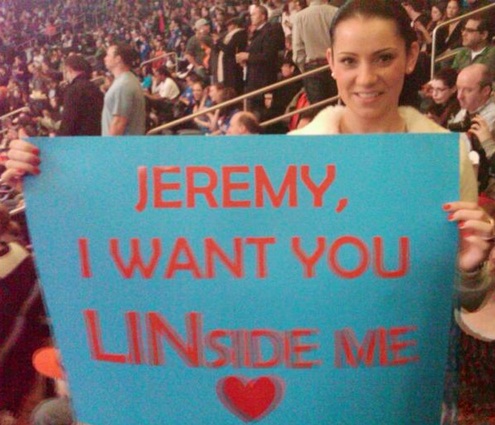
If I may: a brief word about Jeremy Lin, who has seemingly taken his talents to the Houston Rockets.

So, if it was my choice (and I guess it is my choice, seeing as how this is my blog and all), I'd probably never write about Jeremy Lin again.  It was exciting to plow into uncharted territory, and even play a direct role in charting some of that strange territory, but there were a lot of frustrating moments throughout the ordeal.  That isn't to say I didn't have any fun during those 26 games of magic and wonder.  Verily, Linsanity was a wild ride, and a lot of fun while it lasted.  Lin played out of his mind, the Knicks were a ton of fun to watch, and lots of very smart, insightful analysis was produced by basketball analysts and enthusiasts alike.


But there was a lot of not-so-smart analysis that was produced in the wake of Linsanity.  Even worse, there was a lot of not-so-smart analysis that also was distinctly racist as well.  There were "chinks in the armor", as well as inappropriate ways to "taste the Linsanity".  Throughout the run, analysts and fans attempted to reconcile the obvious point of Linsanity -- that an Asian-American player had essentially broken a glass ceiling and was succeeding in a "Black man's game -- and provide balanced work that acknowledged the phenotypical notoriety of the event without orientalizing the subject of analysis.  And while some work did a great job at this, other work fell a bit flat.  And some work just missed the mark altogether.  It was a wild and wooly time -- when a bunch of people who were prone to "knowing it all", but had never watched a game of basketball in their lives, suddenly were experts on the game, and Lin's place in it all.

Jeremy Lin is back in the news, even though he hasn't played a minute of meaningful professional basketball since early April.  He recently inked a 3 year, $25.1 million dollar with the Houston Rockets.  He's a restricted free agent, which means the Knicks have the ability to match (or exceed) the contract offer, and retain his services for the length of the deal.  The Knicks had long been expected to match the contract, but after acquiring Raymond Felton (and Kurt Thomas) in a sign-and-trade with Portland, are looking less likely to do so.  Marc Berman of The New York Post wrote on Saturday that the Knicks were unhappy that Lin signed the deal and didn't negotiate directly with the Knicks, since the Rockets offered a backloaded contract that will put the club in the luxury tax after the 2014-2015 season, and will make it hard to sign quality free agents to improve the team.  Berman writes that Daryl Morey, the Rockets' GM, signed the deal knowing that the Knicks would quickly match the contract.  Then, as almost an afterthought, Berman writes: "Morey is good friends with former Rockets center Yao Ming, Lin's mentor."


Huh?  Yao Ming?  Lin's mentor?  Reading this immediately made me double take.  Yao?  Lin's mentor?  What?  When did Yao Ming and Jeremy Lin find the time, space and circumstances to craft a mentor-mentee relationship?  Besides the fact that a retired center would have very little advice to offer an up-and-coming guard, the timing just doesn't seem to make sense.  In 2010, when Yao was last playing in the league, Lin was a member of the Warriors.  Lin's brief stint with the Rockets came long after Yao retired and returned to China, and long before Lin's rise to global stardom.  I suppose Yao might've been around Houston when Lin was a member of the team, but there's no evidence to support this statement.  Nor does it seem to be relevant to this contract dispute with the Knicks in any real way.

In fact, a cursory internet search seems to imply the exact opposite: that Yao and Lin had, and have, no obviously deep relationship, besides the superficial contact that most notable players have with the younger players who respect them.  In a piece published in late February on NBA.com, Yao Ming discussed Linsanity, which at that point was in full-swing.  Yao was excited by Lin's rise to prominence, but noted specifically that he hadn't crafted a close connection with the guard in a racial, nationalistic, or even really a professional way.  As Frank Blineburry wrote in that piece:
"Yao chuckles at some of the stories that have circulated on the Internet saying that he has been a mentor to Lin. 'Please, don't let anyone think that Yao has given him any big secrets about how to play,' he said.  'First, Jeremy doesn't need my help.  He is very talented himself.  And I am a big man and could not teach him how to be a guard.  I know Jeremy.  We have exchanged text messages, just normal stuff, not deep.  I congratulated him this week.  That is all.'"

Okay.  So, I'm not that into accusing people of racism without knowing the person, where they came from, and where they're intending to go with a particular statement, idea or object.  But when something like this happens, you can't help but think about Berman's thinking.  If there's no evidence that Lin and Yao ever had a meaningful relationship, and even published material that states the contrary, why would a well-regarded journalist like Berman include a baseless statement like this?

Easy.  Because Jeremy Lin and Yao Ming look alike.

Reading hastily constructed assertions like Berman's, which don't seem to be based on anything but an assumption by a sports writer trying to beat a deadline -- both of those guys are Chinese, right?  They must be close -- makes me fearful for the future of Jeremy Lin, and the ways that the player and the person will be discussed as time goes on.  It's easy to forget that after just 26 quality games, Jeremy Lin is still discussed as something of a novelty.  26 games is an extremely small body of work to analyze, and at this point, many of those memorable performances seem to exist somewhat in a vacuum.  As such, we must continue to rely on the aspects of Jeremy Lin that, arguably, are least important to his career as a professional basketball player: his race, and the life he lived before he became a highly-paid point guard in the National Basketball Association.


But perhaps now, things will be different.  Jeremy Lin, who was once championed as a walk-on success story in New York, is in all likelihood about to be the starting point guard for the Houston Rockets.  In New York, the focus was on all of the things that Lin had accomplished due to hard work and a little bit of luck.  From here on out, however, Lin must be portrayed as one of the luckiest, most opportunistic players in NBA history. Think about it: how many other athletes have turned, essentially, two months of work into a $25.1 million dollar paycheck?  Lin will be the starter on Day One in Houston, and expected to produce as much as someone who is getting paid $25 million (including a cap-killing $15 million player option in the third year of his deal).  If he succeeds, and becomes a star for the Rockets, he will finally earn the adulation that he received for those 26 quality games.  If he fails, he will be roundly criticized, and lampooned for achieving global phenom status, despite the fact that that condition was created by all of us around him.

At that moment, when Jeremy Lin takes the floor wearing Rockets red, flanked by a crew of expiring contracts that will eventually become Dwight Howard, I hope Linsanity will officially be declared over.  No longer will he be the solitary focus of the New York media, who played as big of a role in the creation of Linsanity as Jeremy Lin himself.  No longer will his strengths be regarded as pleasant surprises, and his weaknesses written off as jitters from a player who never expected to play this important of a role on a big stage.  He will be assessed by the value of his contract, as well the numbers he produces for his team.  And unlike the wooly days of Linsanity, when everything he did was considered to be a shiny bonus, his good nights will be taken for granted, and his bad nights will be hyperanalyzed.  In other words: he'll be just like any other player.


But that's really what we want at this point.  Right?  We don't want to have to roll our eyes at untruths and misplaced assumptions, like the Yao-Lin mentorship that doesn't actually exist.  We don't really want to have to keep coming back to the fact that Jeremy Lin's rise to stardom rested (at least partially) in his designation as a racial "other", at least compared to his peers on the court.  In the same way where we can assume that people in the Congo cheer for Serge Ibaka, or that people in Israel cheer for Omri Cassipi, or that people in Iran cheer for Hamed Haddadi, we can now safely assume that people in Taiwan cheer for Jeremy Lin, and can live without having to read about it after every game.  Jeremy Lin has shown his cards: he is like every other young player, trying to maximize their earnings whenever and however they can.  His couch-sleeping days are over.  And hopefully, so are his days as a racial other, both on the court, and in analysis about the sport.

But if there's one thing about this league that's always painfully true: this ain't over 'til it's over. And in a global capitalist society like ours, I suspect Linsanity is far from over.

Here's to wishful thinking.


Friday, July 13, 2012

Diss Guys and Miss Guys Volume 1


With our “Fortunate Moments for Unfortunate Franchises” segment coming to a close earlier this week, we thought it’d be the perfect time to debut a new weekly segment we’ve been thinking about. A Diss Guy is a player/coach/executive who had an awesome week in terms of their basketball lives, while a Miss Guy is a player/coach/executive who’s definitely seen better days on the hard court. Expect them every Friday, and if you have any nominations feel free to comment and let us know what you’re thinking. Hope you enjoy.

Diss Guy

It’s pretty hard not to like Brandon Roy. B-Roy has always been a favorite here at The Diss, and I’m thrilled he’s able to kick off this new segment as our Diss Guy of the week. Last December Roy announced his early retirement due to degenerative knees that had already been operated on 6 times and no longer contained any cartilage. His medical team told him that by continuing to play he was risking his ability to walk. Well, that was then and this is now. The great LL Cool J once said, “don’t call it a comeback” but I’m pretty sure B-Roy returning to the NBA just 6 months after retiring can justifiably be labeled as a comeback. Earlier this week Roy reached an agreement with the T-Wolves for 2 years, $10.4 million. I’m not sure what we should expect to see out of Roy production wise but you bet your ass we’re pulling for him. B-Roy is a great basketball player, but more importantly he’s a great person. Congrats, Brandon.

Miss Guy

Kobe Bryant is a phenomenal basketball player, but he’s terrible at being married, rocking a goatee, and knowing when to keep his mouth shut. With Major League Baseball on their All-Star break and NFL training camp still a few weeks away – Olympic basketball was the only sporting event being covered this week. In case you missed it, here’s the goatee-sportin’ Bryant explaining exactly how the 92 team had more size and talent but still would fall to the undersized but younger 2012 squad. Really, Kobe? Even if that’s how you really feel, why even bother answering the question - ESPECIALLY in this hypersensitive time when ESPN has NOTHING else to report on? Didn’t you read my damn article about comparisons?! The best part of the story was Michael Jordan’s reaction to Kobe’s comments were that he “absolutely laughed.” Not a great week for the Mamba.